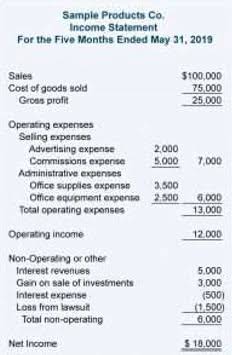
The change in net working capital (NWC) captures the difference between the prior period and current period net working capital how is sales tax calculated (NWC) balance. Net income, or the “bottom line” of the income statement, is the starting line item at the top of the cash flow statement in the cash from operations (CFO) section. Understanding the difference between retained earnings and revenue is crucial for financial literacy and decision-making. While both are essential for business operations, they have distinct roles and sources.
- A summary report called a statement of retained earnings is also maintained, outlining the changes in RE for a specific period.
- Both types reduce retained earnings but differ in the amount by which RE is reduced.
- This equation underscores the fundamental accounting principle that a company’s assets are financed either by borrowing money (liabilities) or by what the shareholders own (equity).
- If an accounting error from a prior period is discovered, companies typically correct the opening retained earnings and disclose the nature and amount of the adjustment.
- Officers of a corporation are appointed by the board of directors to execute the policies that have been established by the board of directors.
- The accounting term that means an entry will be made on the left side of an account.
Original-Principles of Accounting — Financial Accounting
Log onto the Annual Reports website to access a comprehensive collection of more than 5,000 annual https://jasafotoproduk.com/2021/10/07/accounting-pros-are-accounting-payroll-taxes-and-2/ reports produced by publicly-traded companies. The site is a tremendous resource for both school and investment-related research. Reading annual reports provides a different type of insight into corporations.
- For example, the preferred stockholders will be paid dividends before the common stockholders receive dividends.
- Stockholders’ equity is the difference (or residual) of assets minus liabilities.
- There are plenty of options out there, including QuickBooks, Xero, and FreshBooks.
- Where the difference between the shares issued and the shares outstanding is equal to the number of treasury shares.
- Stockholders’ equity is the difference between the reported amount of a corporation’s assets and its reported amount of liabilities.
- A balance sheet helps you understand a company’s financial position at a single point in time.
Cash Balance and Change in Net Working Capital (NWC)
This reinvestment has paid off, as Tesla has become a leader in the electric vehicle market and has seen a dramatic increase in its stock price and shareholder equity. Retained earnings are a reflection of a company’s past successes and its potential for future growth. They play a pivotal role in shaping the strategic direction of a company and can significantly impact shareholder value through various channels. While the immediate gratification of dividend payouts may appeal to some, the prudent use of retained earnings to fund sustainable growth initiatives often yields greater long-term benefits for shareholders. It’s a delicate balance that requires thoughtful consideration of the company’s current performance, market opportunities, and the expectations of its shareholders. Individuals elected by the common stockholders of a corporation to represent the stockholders and to establish the policies of the corporation.

Authorized shares
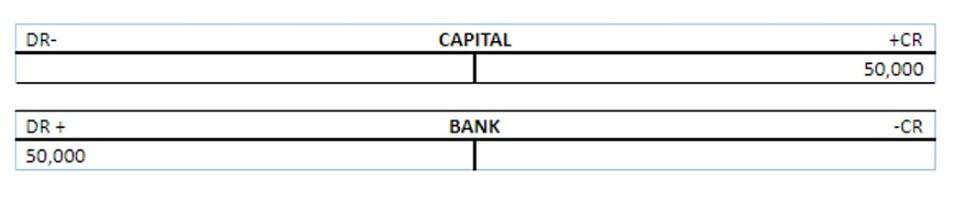
Retained earnings or accumulate losses are normally used to records this in the equity section. In order words, the money that shareholders inject into the company is both records in the assets and equity the same amounts. They are recording in the equity section and the increases are on the credit side which is different from the increasing of assets. Retained retained earnings Earnings (RE) are business’ profits that are not distributed as dividends to stockholders (shareholders) but instead are allocated for investment back into the business. Retained Earnings can be used for funding working capital, fixed asset purchases, or debt servicing, among other things. This account includes the total amount of long-term debt (excluding the current portion, if that account is present under current liabilities).

If the corporation were to liquidate, the secured lenders would be paid first, followed by unsecured lenders, preferred stockholders (if any), and lastly the common stockholders. The subdividing of retained earnings is a way of disclosing the appropriation on the face of the balance sheet. Because of legal requirements, the stockholders’ equity section of a corporation’s balance sheet is more expansive than the owner’s equity section of a sole proprietorship’s balance sheet. For example, state laws require that corporations keep the amounts received from investors separate from the amounts earned through business activity.
Treasury stock purchases and resale
The concept of retained earnings is the centerpiece that links the three financial statements together. Starting off, the cash flow statement is connected to the income statement through net income. During the year, the following transactions affected its stockholders’ equity accounts.
How Retained Earnings Impact Shareholder Value?
- These funds have been reinvested into product development, leading to innovative products like the iPhone and iPad, which have revolutionized the tech industry and generated substantial returns for shareholders.
- Retained earnings are a testament to a company’s past successes and a beacon for its future prospects.
- For example, if a corporation issues 9% preferred stock with a par value of $100, the preferred stockholder will receive a dividend of $9 (9% times $100) per share per year.
- After a 2-for-1 stock split, the same stockholder still owns just 1% of the corporation (2,000 ÷ 200,000).
- Yes, retained earnings can be negative if a company has accumulated losses.
At the time of the split a memo entry would be entered in the records stating that after the 2-for-1 stock split, the corporation has 200,000 shares of $0.25 par value common stock outstanding. Accumulated other comprehensive income is a separate line within stockholders’ equity that reports the corporation’s cumulative income that has not been reported as part of net income on the corporation’s income statements. The items that would be included in this line involve the income or loss involving foreign currency transactions, hedges, and pension liabilities. Earnings per share must appear on the face of the income statement if the corporation’s stock is publicly traded. The earnings per share calculation is the after-tax net income (earnings) available for the common stockholders divided by the weighted-average number of common shares outstanding during that period. The 2-for-1 stock split will cause the quantity of shares outstanding to double and, in the process, cause the market price to drop from $80 to $40 per share.